
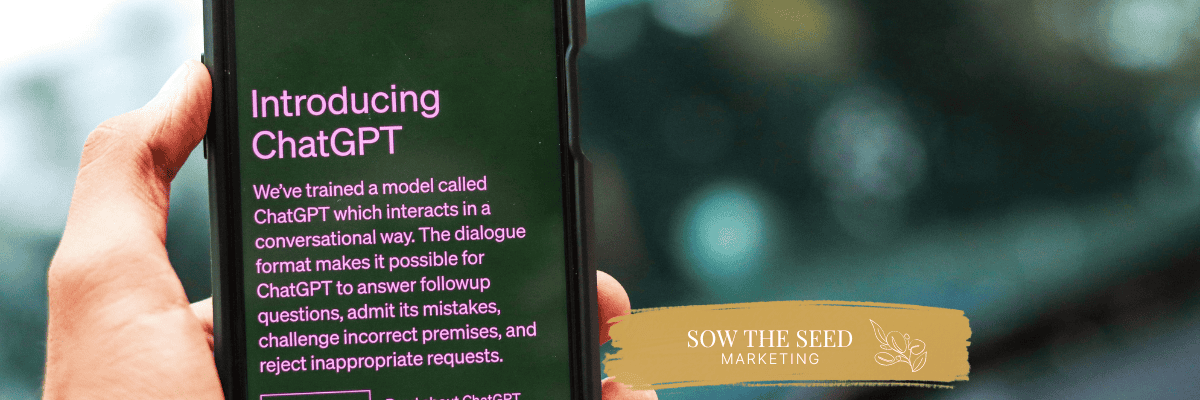
Search behaviour has changed faster than most local businesses have noticed. A growing share of your customers aren’t typing a search term into Google and scrolling through results anymore. They’re asking an AI tool a question, in plain language, and acting on whatever answer comes back.
Understanding how that shift actually plays out matters more than the theory behind it. Here’s what it looks like in practice for a Shropshire business.
The Questions Are Getting More Specific
One of the biggest changes is the kind of question people ask. A Google search tends to be short: “nursery Shropshire,” “electrician Telford.” An AI search tends to be a full sentence, closer to how someone would ask a friend for a recommendation: “who’s a good local electrician near Telford who does EV charger installs” or “where can I buy bare root hedging direct from a grower in Shropshire, not a garden centre.”
This matters because it changes what your content needs to do. A page built purely around a short keyword doesn’t answer a specific, conversational question. A page that clearly and directly addresses the exact scenario a customer has in mind stands a far better chance of being the one an AI tool pulls from.
People Are Searching for the Direct Route, Not Just the Nearest Option
A pattern worth paying close attention to is customers actively looking to cut out the middleman. Someone searching for “buy [product] direct from the supplier” or “who actually makes [product] near me” isn’t just looking for proximity. They’re looking for authenticity and value, and they’re using AI tools to surface businesses that a standard Google search might bury under bigger, better-optimised competitors.
If your business genuinely offers that direct relationship, whether that’s a manufacturer selling straight to the public, a grower supplying without a retail markup, or a trade business skipping the referral layer, this is exactly the kind of question AI search rewards a clear, honest answer for. The businesses winning here aren’t always the biggest. They’re the ones whose website actually says, in plain terms, why going direct to them is worth it.
Local Context Still Matters, Just Differently
AI tools do factor in location, but not in quite the same way Google Maps does. Rather than pulling from a ranked list of nearby businesses, an AI tool is more likely to name a business it can confidently describe: what you do, where you’re based, who you serve, and why you’re a good fit for the specific question asked.
This means your local signals, your Google Business Profile, consistent business details across your site, clear service area information, still matter. But they need to sit alongside content that actually explains your business in a way an AI system can summarise accurately.
What This Means for How You Write About Your Business
The businesses showing up well in AI search tend to share one thing: they’ve written about themselves clearly, specifically, and honestly, rather than in vague marketing language. “We offer a range of services tailored to your needs” tells an AI system nothing useful. “I supply bare root hedging direct to local gardeners across Shropshire, with no retail markup” gives it something concrete to work with and repeat.
If your website talks about what you do in general terms rather than specific ones, that’s usually the first thing worth fixing, and it’s a quick win regardless of whether AI search is a priority for you yet.
Finding Out How Your Business Shows Up
The only real way to know how your business is being found, or missed, is to test it with the actual questions your customers are likely asking. I do exactly this as part of my AI Search Services, running your real customer questions through the main AI platforms and showing you precisely where the gaps are.
If you’d like a clearer picture of how your business shows up right now, book a free strategy call and I’ll test it before we speak. And if your foundations need work before any of this can take hold, my SEO Services page covers where that starts.
Leave a Reply