
If you’ve spent any time reading about SEO recently, you’ve probably come across the term E-E-A-T. It gets thrown around a lot, often without much explanation of what it actually means or why a small business in Shropshire should care about it. Here’s the plain English version.
What E-E-A-T Actually Stands For
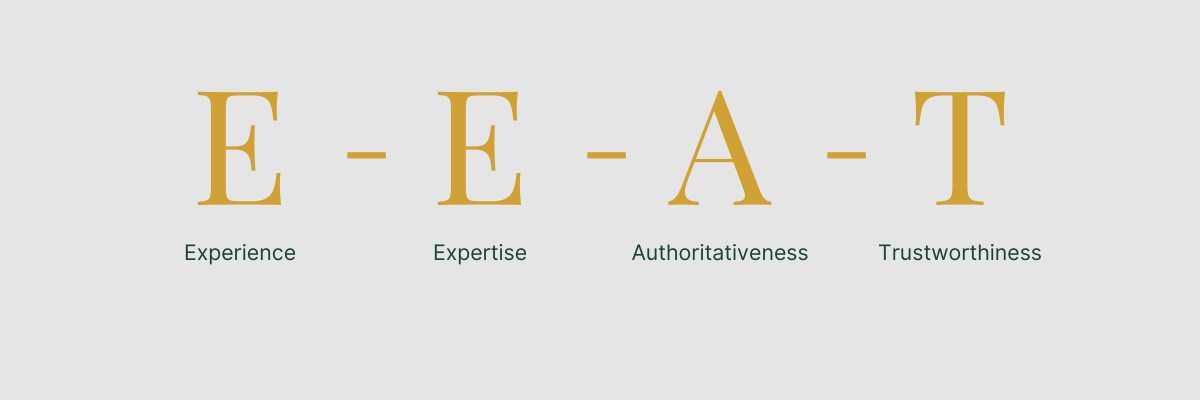
E-E-A-T stands for Experience, Expertise, Authoritativeness, and Trustworthiness. It’s part of Google’s Search Quality Rater Guidelines, the framework Google uses to assess whether content deserves to rank well, particularly for topics where getting it wrong could genuinely harm someone, health, finance, and safety-related searches especially, though it applies more broadly too.
Breaking Down Each Part
Experience
Has the person or business creating this content actually done the thing they’re writing about? A gardener writing about soil preparation from years of hands-on work carries more weight than a generic article written without any first-hand involvement.
Expertise
Does the creator have genuine knowledge or qualification in the subject? This doesn’t always mean formal credentials, though where they exist and are relevant, they help. It means demonstrable, specific knowledge rather than surface-level generalities.
Authoritativeness
Is this business or person recognised as a credible source on the topic, by other websites, by customers, by their industry? This is where things like genuine local links, reviews, and mentions from relevant sources come in.
Trustworthiness
Is the site itself secure, transparent, and honest? Clear contact information, accurate claims, transparent pricing, no misleading content. Trustworthiness sits at the centre of the whole framework, Google’s own guidance treats it as the most important of the four.
Why This Matters for a Shropshire SME
E-E-A-T isn’t a direct ranking factor you can tick off a checklist, it’s a framework, not an algorithm setting. But the signals that build E-E-A-T, genuine expertise clearly demonstrated, real reviews, transparent information, consistent trust signals across your site, do influence how well your content performs over time.
For small businesses specifically, this is genuinely good news. E-E-A-T rewards authenticity and genuine expertise over size or budget. A well-established local tradesperson with real experience and real reviews can out-signal a much bigger, more generic competitor if the fundamentals are in place.
How to Actually Build E-E-A-T on Your Website
Show real experience, not just claims
Case studies, specific examples, photos of actual work, these demonstrate experience far more convincingly than a generic “we’re experts in X” statement.
Make expertise visible
Author bios, relevant qualifications, years in business, these all help, particularly when placed clearly on the pages where they’re relevant rather than buried on a separate about page nobody visits.
Build genuine authority, not just links
The link building guide covers this in more depth, but the short version is that genuine, relevant links and mentions matter more than volume.
Get the trust basics right
HTTPS, accurate contact details, clear privacy information, honest pricing where relevant. These are simple, mechanical things that are easy to overlook but directly affect trustworthiness.
If you want to see how this connects to the wider shift in how people are searching, including AI tools, the guide on whether your Shropshire business is invisible to ChatGPT covers how these trust signals matter beyond traditional Google search too.
For Google’s own explanation of the concept, their Search Quality Rater Guidelines documentation is the original source this entire framework comes from, worth a read if you want the detail behind the summary.
Where to Start
If you’re not sure whether your website is currently sending the right trust signals, or you want an honest assessment of where the gaps are, a free Seed Session is a good place to start.
Leave a Reply