
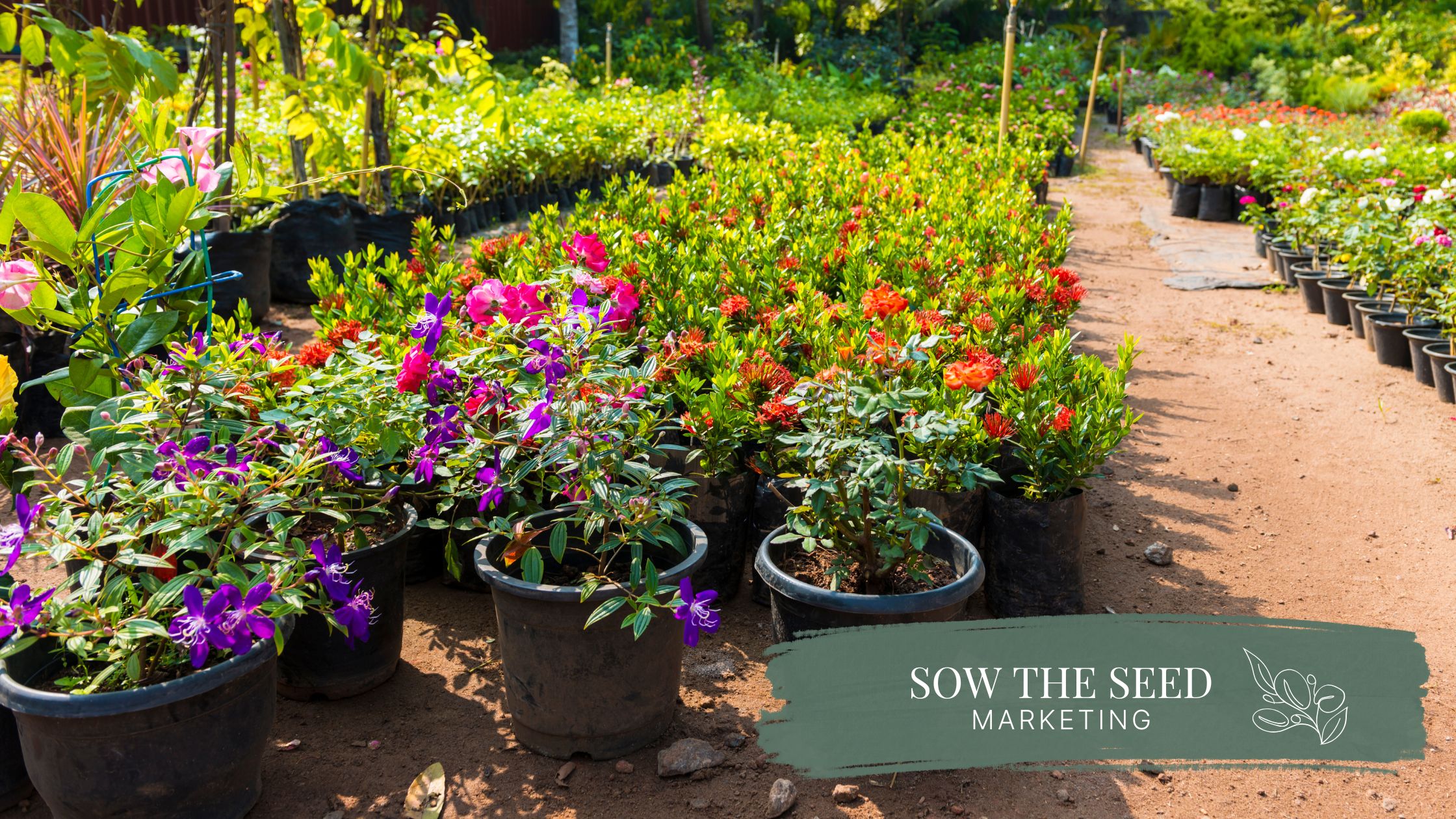
If you are planning to launch or grow an independent plant nursery in 2027, the biggest hurdle your business faces isn’t a competitor with lower prices. It is invisible marketing. Most independent business owners do not struggle with marketing because they lack passion. They spend time doing the wrong things, like wondering what to post on Facebook, while customers ready to buy are searching somewhere else. If I were managing the plant nursery marketing for a business launching or scaling in 2027, I would focus entirely on commercial outcomes. Here is the exact framework I would follow starting right now.
Define Your Market Position First
Before spending money on Google Ads or search engine optimisation, you need to answer the question every prospective customer asks: why should I drive to you instead of buying online or visiting a national chain?
If your answer is simply that you offer high quality and friendly service, you will remain invisible. You need a clear point of difference. That might mean focusing on rare or hard-to-find specialist varieties, selling plants grown locally on site and hardened to regional weather, or offering tailored advice and stock chosen specifically for local soil conditions, like heavy clay or exposed sites. Your unique positioning forms the basis of every piece of digital marketing and search strategy you build next.
Make Your Google Business Profile a Top Priority
For a physical nursery, local search visibility is your main source of footfall. When someone searches for a plant nursery near me, or asks where to buy fruit trees in Telford, they are holding a card in hand ready to buy.
Most businesses leave their Google Business Profile incomplete or out of date. To capture that demand, ensure your seasonal opening hours are accurate so visitors never arrive to a locked gate. Use real, well-lit photographs of your premises, plant bays, and entrance, as Google prefers authentic imagery over stock photos. You should also ensure your primary categories, website links, and customer reviews clearly reflect your core services.
Build a Website That Converts Search Intent
A nursery website should not function like a static digital brochure that lists your address and opening times. To drive search traffic that turns into sales, structure your site around the exact questions your customers ask before buying.
Instead of a generic page listing hedging plants, create targeted content that addresses specific problems, such as the best privacy hedges for windy, clay-soiled gardens. Rather than a basic page for shade plants, explain which flowering perennials survive in deep, north-facing shade. When you provide practical answers to specific problems, you build immediate credibility and can direct that reader straight to a product page or stock enquiry form.
Capitalise on the Early Autumn Planting Season
If you are reading or planning this in late summer, do not wait until spring to start your marketing. Autumn is a crucial period for horticultural sales, particularly for trees, shrubs, perennials, and spring bulbs.
Publishing clear guides in September about why autumn is the best time to plant trees captures customers who spend significantly more per visit than casual impulse buyers in May. It also helps build your domain authority well ahead of the spring rush.
Lead With Authentic Business Knowledge
Large retail chains have big advertising budgets, but independent nurseries have direct expertise. If your team knows exactly why a specific plant variety will fail in local conditions, publish that advice on your website.
Write in plain, clear language that speaks directly to the customer. Practical, evidence-based insight builds trust, and a customer who trusts your advice will choose to visit your nursery over a generic retail outlet every time.
Focus on Revenue Rather Than Vanity Metrics
Increased website traffic means nothing if it does not lead to higher sales. When reviewing your plant nursery marketing metrics, look past superficial numbers and measure direct business outcomes, such as the number of phone calls and direction requests generated through local search, conversion rates on stock reservations, and the cost of acquiring a customer across different seasonal campaigns.
Align your spend directly with actual buying cycles instead of running generic campaigns year-round.
How to Focus Your Plant Nursery Marketing for 2027
First, clarify your market positioning so customers have a clear reason to choose you over competitors. Second, optimise your local Google presence to capture high-intent searches nearby. Third, turn your website into a sales asset by answering practical buying questions. Fourth, build seasonal campaigns that target key buying periods like early autumn. Finally, measure your results by trackable revenue rather than website traffic alone.
Let Us Audit Your Nursery Marketing
If you are launching or scaling an independent business and want to know where your best opportunities lie, I can help you evaluate your options.
For authoritative market data on UK gardening trends and consumer spend, you can also view the latest market updates from the Horticultural Trades Association.
The Seed Session is a free, 30-minute diagnostic call with Sow The Seed Marketing. I will look live at your current online visibility, spot where you might be losing potential customers, and give you three practical actions you can take straight away to improve your search presence and footfall.
Leave a Reply